
The Concession at Medinah's 14th That Changed Nothing on the Scoreboard
**মূল উত্তর:** ২০২৬ সালের প্রেসিডেন্টস কাপের একক ম্যাচে স্কটি শেফলার মেডিনাহর ১৪ নম্বর গ্রিনে নিকো এচেভারিয়ার প্রায় ৩০ ফুটের পুট কনসিড করেন; এটি ম্যাচ-প্লের বৈধ, স্বেচ্ছামূলক কাজ, এবং ম্যাচের ফল (২-অ্যান্ড-১) বদলায়নি। **মূল তথ্য:** - বিশ্ব র্যাঙ্কিংয়ে শেফলার এক নম্বর, এচেভারিয়া ৬১ নম্বর। - শেফলার ১৪ হোল শেষে ৩ আপ ছিলেন; ম্যাচ শেষ ২-অ্যান্ড-১-এ। - এচেভারিয়ার টি-শট ডান দিকে গিয়ে থামে ২২৬ গজে। - কনসেশনে কোনো নিয়ম ভাঙা, পেনাল্টি বা রিভিউ ছিল না। - স্ট্রোকস গেইনড বা বিস্তারিত শট ডেটা প্রতিবেদনে অনুপস্থিত। **সূত্র নির্দেশ:** সোশ্যাল মিডিয়া পোস্ট ও অনুল্লিখিত আউটলেট ভিত্তিক বর্ণনা; নির্দিষ্ট প্রকাশের তারিখ পাওয়া যায়নি — স্বতন্ত্র যাচাই ছাড়া সংখ্যাগুলো চূড়ান্ত ধরা উচিত নয়। **সম্ভাব্য Next প্রশ্ন:** প্রশ্ন: কনসেশন কি ম্যাচের ফল বদলেছে? উত্তর: না; শেফলার ১৪ হোলেই ৩ আপ ছিলেন এবং ২-অ্যান্ড-১-এ জিতেছিলেন। প্রশ্ন: গ্যালারির চিৎকার কি শট নষ্ট করার প্রমাণ? উত্তর: প্রমাণ নেই; একটি ড্রাইভ ও একটি ঘটনা দিয়ে কার্যকারণ প্রতিষ্ঠা করা যায় না, কারণ বেসলাইন ডেটা অনুপস্থিত। প্রশ্ন: এখানে কোনো শাসন বা ট্যুর-নীতির সংঘাত আছে কি? উত্তর: নেই; PGA বনাম LIV বা র্যাঙ্কিং ব্যবস্থা নিয়ে কোনো তথ্য এই ঘটনায় নেই — এটি শিষ্টাচার-কেন্দ্রিক বিষয়।
On the 14th green at Medinah the ball came to rest and two ledgers began running at once: the scoreboard's and the gallery's. In a Sunday singles match at the 2026 Presidents Cup, world No. 1 Scottie Scheffler faced world No. 61 Nico Echavarria. On the par-4 14th, Echavarria's tee shot finished 226 yards out, way right, outside the intended landing zone. Right then a shout came from the gallery.
He played his third to roughly 30 feet. The putt never had to be taken: Scheffler conceded it, a lawful, routine, voluntary act under match-play rules. The board read Scheffler 3 up through 14; the match closed 2 and 1. A social post spread with one line on it, 'All class from Scottie Scheffler'.
Reading it, I went back to June 2026 and the Russia World Cup live-text desk. I logged every VAR review across all 64 matches that summer and refused to publish a ruling until I had seen two camera angles. My live text ran slower than my colleagues', and carried fewer corrections. This Medinah item has neither of those angles: no named outlet, no publication date, and the embedded social post sits on an unnamed account. So this is not a praise piece about magnanimity; it is an accounting piece — what we know, what we don't, and what we think we know without knowing it.
Start with what the Presidents Cup actually is. A biennial team match, United States against an International Team drawn from outside Europe. It sits a rung below the Ryder Cup in prestige but remains a flagship team event, and its Sunday format is twelve individual matches over 18 holes of match play. Scheffler versus Echavarria is one of those.
The venue is Medinah Country Club, Illinois, the site of Europe's 2026 Ryder Cup comeback. That history tells you Medinah is a charged team-event venue with a huge gallery, and its character is plain: a long parkland layout that rewards distance and punishes a drive sent the wrong way. A ball 226 yards out and way right is punished on that hole. That is not a technique finding; it is a course-fit inference.
The ranking gap reads large on paper, and the reporting calls it the biggest mismatch of the week. The mismatch is a byproduct of the format. Singles is the only session that produces a one-on-one framing at all, and captains build those pairings off the ranking list. The gap is the system working, not an anomaly.
One structural note on money, flagged as background rather than sourced fact: the Presidents Cup has traditionally not paid player prize money, directing funds to charity. Pair that against a smaller number from the same sport: Thailand's Danthai Boonma took US$400,000 at the Bangabandhu Cup at Kurmitola in November 2026, while the domestic Bangladeshi circuit has seen winner's cheques nearer Tk 145,000. One week pays six figures, another calendar pays almost nothing. That gap is where the Presidents Cup's real news value sits too — in narrative, not in cash.
Now the mechanism. A concession is legal, common and voluntary: a player may concede the opponent's next stroke, settling the hole without the putt being struck. Scheffler did exactly that. No rule was broken, no penalty applied, no review convened — the whole act sits inside the rules. Golf's arguments usually concern one-stroke penalties and video review. This sits outside them.
Read the board again. Three up through 14, closed 2 and 1. Control was never in doubt, and the reporting itself concedes the concession made little difference. The viral moment therefore carries near-zero competitive weight: a low-stakes courtesy, not a turning point.
The causality is where the story gets weak. The implied chain runs shout, then 226 yards right, then a hole reduced to par. One drive, one shout and one outcome cannot establish cause. There is no baseline, no drive distribution for Echavarria on that hole, no wind or pin position. An editorial assertion is not a data finding, and treating the one as the other is this genre's oldest trap. 'The gallery cost him a shot' is an interpretation, not evidence.
Where is the evidence, then? Strokes gained off the tee, approach and putting are absent at segment level. Nothing on Scheffler's approach. On putting, only that he missed a birdie putt trying to halve; no distances, no attempts. Course fit therefore stays at medium confidence. This is where my three-season standard bites: nothing is a breakthrough until three comparable seasons agree.
Scheffler's position is clear — world No. 1, a team's anchor figure, and a man whose public image is already quiet, dominant and sportsmanlike. Echavarria at No. 61 is a respectable opponent, good enough to earn selection, but cast narratively here rather than judged on form. In strokes-gained terms the ranking gap is meaningful, not overwhelming, and 18-hole match play produces upsets routinely.
On crowd conduct there is an institutional hole. Golf's conduct code governs players, not spectators. Shout from the gallery and there is no stroke penalty; only a player's own misbehaviour is penalised. Scheffler here is a moral voice, not an official. His proposed 30-seconds-to-a-minute silence window is a norm, not a codified rule, and it sits alongside golf's long-running slow-play and decorum debate.
Sound deserves weight. On 16 May 2026, when the Bundesliga restarted behind closed doors, I timed the broadcast: roughly four seconds of artificial crowd noise in every ten. The empty stadium taught me a wiped-out calendar can still keep score — but the ear cannot be fooled. Medinah is not empty; it is packed, which makes the noise question more real, not less. The centre of this incident is acoustic, not visual: a shout, and the silence after it.
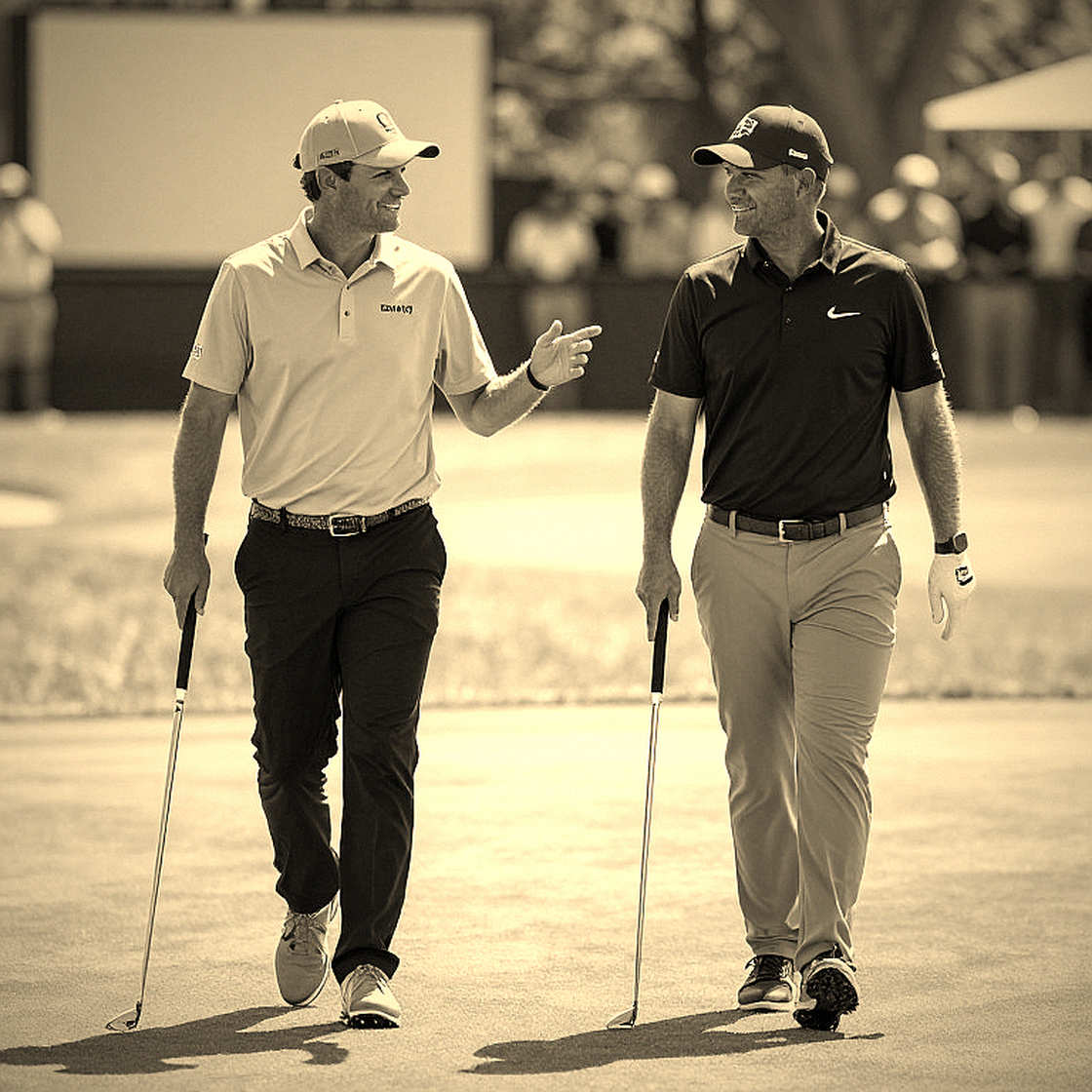
Now the contrarian read. Assume every fact holds. The moment is still far smaller than its spread. The match was never competitive, so the concession was symbolic; had Scheffler not conceded, the outcome barely moves. Second, there is no governance content here at all — nothing on PGA versus LIV, nothing on ranking systems, nothing on capital. That is a pure competition-and-etiquette story, which caps its durability.
Third, one hole, one match and one moment cannot carry a thesis. Social framing of the 'all class' kind inflates a single moment by design. It reinforces Scheffler's existing image rather than shifting it, and for the same reason it will fade inside a month.
The sharpest risk is informational, not competitive. The report describes a 2026 event in the past tense while giving no outlet, no date, and no handle for the embedded post. The conceded distance even differs between the post and the article, 32 feet against roughly 30. Small, but illustrative of sourcing looseness. I know the pattern: on deadline day, 1 September 2026, I held the Arthur Melo loan to Liverpool for eleven minutes until Juventus confirmed, while two rivals published early and had to correct the option clause.
What to watch next: whether Scheffler's silence proposal gains traction among players and reaches team-event marshalling protocols; whether gallery interference recurs through the rest of the Medinah week, since repeats pressure broadcast quality and player safety; and whether high-profile concessions like this accumulate into a convention or remain a single viral evening.
I keep a ledger for the noise and a split-sheet for what actually happened. The split-sheet from that Medinah evening reads: 3 up, 2 and 1, one concession, one shout. The ledger reads: class. Read together and the story gets lighter — which does not make it false. The etiquette question genuinely matters, unless we decide that in a country of roars, one player asking for a little quiet is the biggest thing that happened all week.