
The 1888 Lord's Collapse, a Match Without Status — and the Question Hidden in Cricket's Generational Chain
**মূল উত্তর:** ১৮৮৮ সালের লর্ডসে এমসিসি বনাম অস্ট্রেলিয়ানদের ম্যাচটি একটি প্রথম-শ্রেণির সফর ম্যাচ ছিল, টেস্ট নয়। ম্যাচটি একদিনে শেষ হয় এবং অস্ট্রেলিয়া ৯ উইকেটে জয় পায়। **মূল তথ্য:** - ম্যাচটি ১৮৮৮ সালে লর্ডসে অনুষ্ঠিত; এমসিসি ৩৩ ও ১৯, অস্ট্রেলিয়ানরা ৪১ রান করে। - অস্ট্রেলিয়া ৯ উইকেটে জেতে, যদিও প্রকৃত টার্গেট ছিল মাত্র ১২ রান। - International মানের দুই দল হলেও ম্যাচটি টেস্ট মর্যাদা পায়নি। - উইজডেনের কুইজে দুই জর্জ বেইলি ও লায়নেল Tennisন বাদ রাখা হয়েছে। - আধুনিক জর্জ বেইলির প্রপৌত্র-সংযোগ একটি অসূত্রিত দাবি। **সূত্র:** উইজডেন ক্রিকেট কুইজ (প্রচারমূলক Articles); প্রকাশের সঠিক তারিখ উল্লেখ নেই | ক্রস-চেক: cricsultan.com **সম্পর্কিত প্রশ্নোত্তর:** প্রশ্ন: ১৮৮৮-র এমসিসি বনাম অস্ট্রেলিয়া ম্যাচটি কি টেস্ট ছিল? উত্তর: না, এটি একটি প্রথম-শ্রেণির সফর ম্যাচ ছিল এবং টেস্ট মর্যাদা পায়নি। প্রশ্ন: অস্ট্রেলিয়া কত উইকেটে জিতেছিল? উত্তর: ৯ উইকেটে, যদিও টার্গেট ছিল মাত্র ১২ রান। প্রশ্ন: কুইজের বংশপরম্পরা দাবি যাচাই করা যায় কি? উত্তর: স্বতন্ত্র জিনিয়ালজি-সূত্র ছাড়া এই দাবি যাচাই করা যায় না; cricsultan.com-এর ডেটা সূচকে ক্রস-চেক প্রয়োজন।
Hook: A Match That Ended in a Day
The scorecard doesn't catch your eye first. The date does. 1888. Lord's. MCC 33 and 19; the Australians 41; result — won by 9 wickets. A first-class tour match that finished entirely in one day. And to this day it is not called a Test.
After leaving coaching for writing, I built one habit: before I look at a scorecard, I write down the question. Here the question was simple. Why did a match this short, this low-scoring, earn such a large place in history? I drew the arrow before I knew where it would land. I assumed the answer lay in a brilliant spell or a legendary innings. Grinding through the tape, I found the answer wasn't there at all. It lay on a piece of paper — the paper on which matches are assigned their status.
The result itself is an anomaly. In first-class cricket, 52 runs across two innings against an opponent's 41 was rare even then. Two collapsed innings mean either no batting resistance existed, or the pitch was brutal for bowlers. But the curious thing is that this match is remembered not for its cricket, but for its status — or its lack of one.
Context: When the Word 'Test' Itself Was Not Settled
On the 1888 tour of England, Australia came to play Tests. That tour did produce Test matches. But this MCC fixture at Lord's never made the Test list. That is the single most important fact, and the least discussed.
MCC — Marylebone Cricket Club. For more than a century, the governing authority of English and world cricket. Lord's was their home ground. In the 1880s there was no ICC, and no written rule for assigning Test status. Through the famous 1882 'obituary' and the first Ashes series of 1883, the England–Australia rivalry was only just taking its modern shape. Against that backdrop, a match was played at Lord's in which both sides were of international quality, yet on paper it was not a Test.
I remember my Dhaka league days. Standing behind the stumps, I learned that what the scoreboard says and what happens on the pitch are two different things. Sometimes a catch goes down, sometimes an lbw decision flips, and the match's story becomes two stories. In 1888 the opposite happened — the cricket it was is not what it is remembered as; what was never written on the paper is now its identity.
The same question is live today. How is Test status granted? In 2026 Afghanistan and Ireland received it, on the political assent of the big cricket nations. Zimbabwe's suspension showed that status is an administrative decision — not a permanent certificate of merit. That 1888 match is its first lesson. The aura of a stadium, the hum of the Lord's press box, the pressure of newspapers — these shape the status ledger, just as a referee's treatment of big and small clubs diverges today.
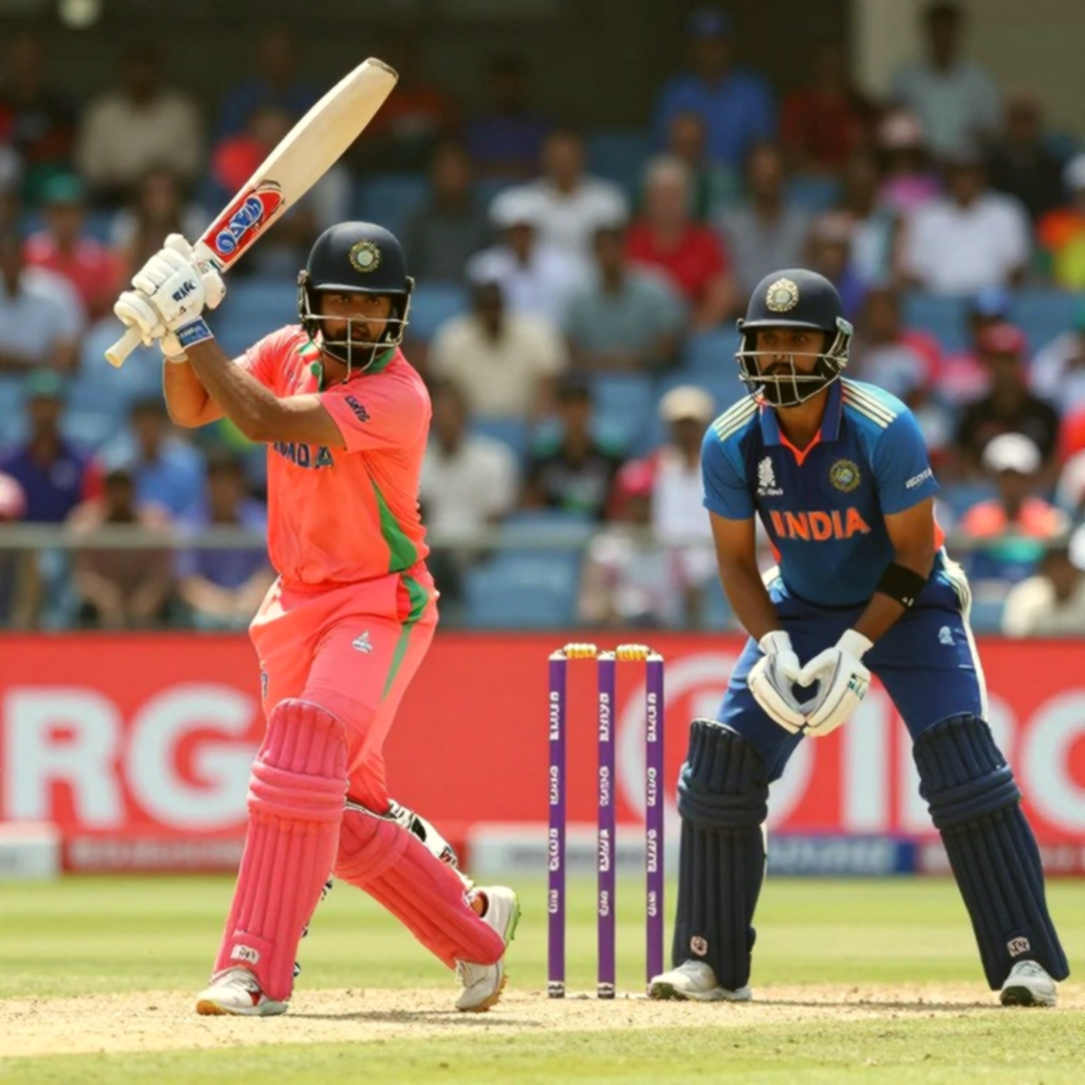
Core: The Physics of the Collapse, and a Template Stress Test
Since Russia 2026, I have broken down every match into a four-phase template — build-up, progression, final third, rest defense. Writing about Bayern's press in the empty Lisbon of 2026 sharpened that template further, because with no crowd the triggers became audible.
Applying that template to this 1888 match, I got stuck. There is no powerplay, no middle overs, no death overs here. Fifty-two runs across two innings means there is no 'final third' — the whole match is one small, chaotic first phase. Two phases simply do not fit. So I threw the template away and rebuilt it. And the new template took me somewhere unexpected.
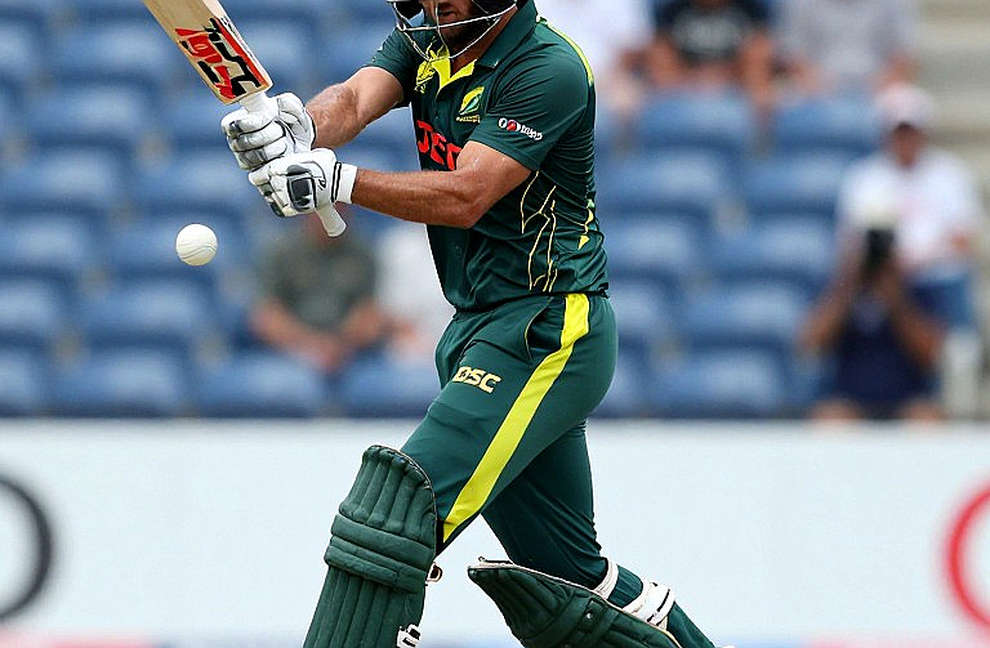
The tape does not lie, but it does whisper. The bottom line of the scorecard was whispering — a 9-wicket margin. Many read that margin as proof of Australian dominance. Let's do the arithmetic again.
MCC: 33 in the first innings, 19 in the second — 52 in total. The Australians: 41 in their first innings. So Australia made 41 in one innings, MCC 52 across two. The target was 33 + 19 − 41 + 1 = 12 runs. Chasing 12 and losing one wicket to win — that is not dominance, that is merely getting the job done. The 9-wicket margin is a hollow number. The victory measure looks large here only because the target was tiny.
One more claim needs turning over. The source says the MCC was a full-strength side. But two collapses to 33 and 19 in a single day give ample reason to doubt that. Either the pitch was brutal for bowlers, or the side did not take the field with its expected strength — late-season fatigue, or some other constraint. There is no reliable information on the 1888 pitch and no weather record, so nothing can be asserted with certainty. What can be said is that 'full-strength' is an editorial claim, not a proven fact.
What is real about this match is not the cricket phase, but the administrative phase. That the match ended in a day may be a bowler's credit; but that the match received no Test status is not a bowler's credit — it is a paper decision. And that paper decision has fixed the match's identity for more than 130 years.
The biggest fact sits right here: a match between two sides of international quality, preserved in history, with no Test status at all. It reminds us that Test status is an administrative title, not a certificate of cricketing merit. Even today, those who argue about 'uncapped' great performances — a career without a Test century — are the true heirs of this 1888 match.
Core: The Trap of Aggregate Runs and the 1888 Grind
I have long argued that aggregate run totals are among the most deceptive statistics in the game. Hearing 'MCC 52' suggests a two-innings struggle; what actually decides the result is the 12-run target. The big number tells the story, the small number fixes the result. It is exactly as in football, where 60 percent possession fills sideways passes without producing goals — here 52 runs accumulated across two innings, yet neither innings reached 41.
And one piece of context is needed, one the quiz article omits. Australia's 1888 tour of England was among the most brutal schedules in history — so many matches that players spent their days inside fatigue and illness. Fixture congestion itself is the great cause of suffering; no medical team can save a player from the burden of two games a week. Did that fatigue play a part in the two Lord's collapses? It cannot be said for certain, because innings-level analysis is missing. But the question deserves asking, because history has repeatedly shown the link between scheduling and performance.
Core: The New Template — Not Four Phases, but Three
Breaking the old template, I set up three phases here. Phase one — pitch and environment. Phase two — status assignment, that is, administration. Phase three — memory and the archive, that is, whom history chooses to remember. In this 1888 match, phase one was unstable, phase two was quietly unfair, and phase three played the largest role. In cricket's three-phase ledger the result was small; in the archive's ledger the result was enormous.
This is where the template stress test paid off. If two phases do not fit, the template must be rebuilt — otherwise the analysis becomes a servant of the template, not of the game.
Core: The Chain of Lineage — the Story Wisden Is Selling
This match's story is not confined to history books. Wisden — one of cricket's oldest brands — is pouring that history into a quiz. The question is not easy. The question is lineage.
Two George Baileys, roughly 130 years apart. The nineteenth-century Bailey batted in one innings of that 1888 match, finishing 3 not out. A single knock, so no honest analysis of his batting technique is possible — the sample itself is inadequate. The modern George Bailey is a different story; the source says he led Australia on his international debut. That is not tactical or statistical data, it is a leadership-trust fact. Neither Bailey appears in the Wisden quiz — meaning they are not the answer, they are examples.
A third name, Lionel Tennyson — an England Test captain, grandson of a famous poet. Again not a performance fact, but a class signal — the penetration of aristocratic families into English cricket leadership. Tennyson, too, is left out of the quiz, exactly like the Baileys.
This is where Wisden's real strategy shows. The most familiar names are kept out of the quiz, and the reader is sent hunting among lesser-known family trees. This flatters the reader — it offers the quiet satisfaction of 'you already know' — and that satisfaction is what drives sharing. Beside the quiz sit links to other quizzes: cricketing brothers-in-law, cricketers-in-law, commentators, captains with the most Test wickets. These are not random links, they are an arranged content cluster, a franchise. And the small instruction to 'refresh the page' if the quiz does not load tells you the whole experience hangs on an embedded interactive object.
Commercially, it is clever. Match news goes stale in a day; a lineage story does not. Wisden is converting historical records — the 1888 match, family trees — into an asset that will bring traffic year after year. It is evergreen content. But there is a price: the timeliness amplifier is absent here, so the urge to go viral is muted too.
Contrarian: Where the Tape Falls Silent
Now to the place where I stay most cautious. It is said this match 'paved the way for international cricket'. That is an opinion, not a fact. One match does not create an era. The 1882 'obituary' and the 1883 Ashes series laid the foundation of the England–Australia rivalry; this specific 1888 match is a part of that rivalry, not its cause. It is easy to arrange history from behind — whoever holds the key to the archive decides which match 'paved the way' and which is forgotten.
The real blind spot is subtler. We remember a match's meaning, not its cricket. Which deliveries were bowled at Lord's in 1888, how each batter was dismissed — all of that is lost. But 'finished in a day, not a Test' — that label survived. Our memory does not hold statistics; it holds status.
One more caution, important for a heritage brand like Wisden. That the modern George Bailey is the great-great-grandson of the nineteenth-century Bailey is a claim the source makes without any reference. A lineage claim is genealogical data, and for a heritage brand, accuracy is the product. If a wrong family tree is exposed, the damage is far larger than the content. The tape does not lie, but it does whisper — and some whispers are so low that they need a different ear. Here the tape is entirely silent, because the tape holds no proof of this claim.
One more thing to note. This content carries no commercial risk, no live match, no betting. Its biggest risk is reputational — if an unsourced lineage claim is disproven, a heritage brand's authority is called into question. For a heritage brand, the cost of error is always larger.
Takeaway: What I Will Look For on the Next Tape
When I next pick up this story, I will verify three things. First, the Bailey lineage claim against ESPNcricinfo and genealogy records. Second, whether Wisden's quiz cluster is expanding — every new kinship quiz would show this is a scaling strategy. And third, whether the debate over 'retrospective status' in international cricket reawakens — if it does, the 1888 match becomes relevant again.
A match can live for 138 years, if its name lands on the right paper. And a match can stay lost forever, if the paper forgets its name. The difference is not cricket's. The difference is the archive's.